
Living in a small urban flat doesn’t mean you have to sacrifice comfort or style for lack of space. According to recent UK housing surveys, the average one-bedroom flat in London now measures approximately 46 square metres, whilst similar properties in Manchester and Birmingham often fall below 50 square metres. With urban living spaces shrinking and property prices continuing to climb, making the most of every square centimetre has become an essential skill rather than an optional luxury.
The challenge of small flat living isn’t simply about owning fewer possessions—it’s about working smarter with the space you have. Research from the Royal Institute of British Architects suggests that well-organised homes can feel up to 30 per cent larger than their actual footprint. Whether you’re navigating your first studio flat or trying to accommodate a growing family in a two-bedroom conversion, strategic storage solutions can transform cramped quarters into a functional, organised home that genuinely works for your lifestyle.
Start with a Thorough Declutter
Before purchasing a single storage box or shelving unit, you need to address the fundamental issue: what are you actually keeping, and why? Storage solutions cannot solve a clutter problem; they merely relocate it. Professional organisers consistently report that most households regularly use only about 20 per cent of their belongings, meaning the remaining 80 per cent could potentially be donated, sold, or recycled.
Begin by emptying one room at a time and sorting items into four distinct categories: keep, donate, sell, and discard. Be ruthlessly honest with yourself. That bread maker you haven’t touched since 2021 isn’t earning its place in your limited cupboard space. Clothing that hasn’t been worn in over a year is unlikely to be worn again, regardless of how much it originally cost.
The decluttering process typically takes longer than anticipated—allow a full weekend for a thorough sort of a one-bedroom flat. However, the effort pays dividends immediately. Many people discover they have significantly more usable space than they realised once unnecessary items are removed. You might even generate some welcome income through selling platforms, which can then fund your storage purchases.
Think Vertically: Your Walls Are Prime Real Estate
When floor space is at a premium, the only direction to expand is upwards. Most small flats have walls that remain stubbornly bare whilst occupants trip over possessions scattered across limited floor space. This represents a fundamental misunderstanding of spatial geometry. Incorporating ambient lighting solutions near shelving can further enhance the sense of space and make stored items easier to locate.
Floor-to-Ceiling Shelving Systems
Standard shelving units typically stop at around 1.8 metres, leaving valuable vertical space untouched. Floor-to-ceiling shelving, whether freestanding or wall-mounted, can double or even triple your storage capacity in the same footprint. These systems work particularly well in living areas and home offices, where they can accommodate books, decorative items, and closed storage boxes simultaneously.
When installing tall shelving, ensure it is properly secured to the wall, particularly in properties with plasterboard construction. The last thing you need is a fully laden shelving unit toppling over in a confined space.
Wall-Mounted Solutions
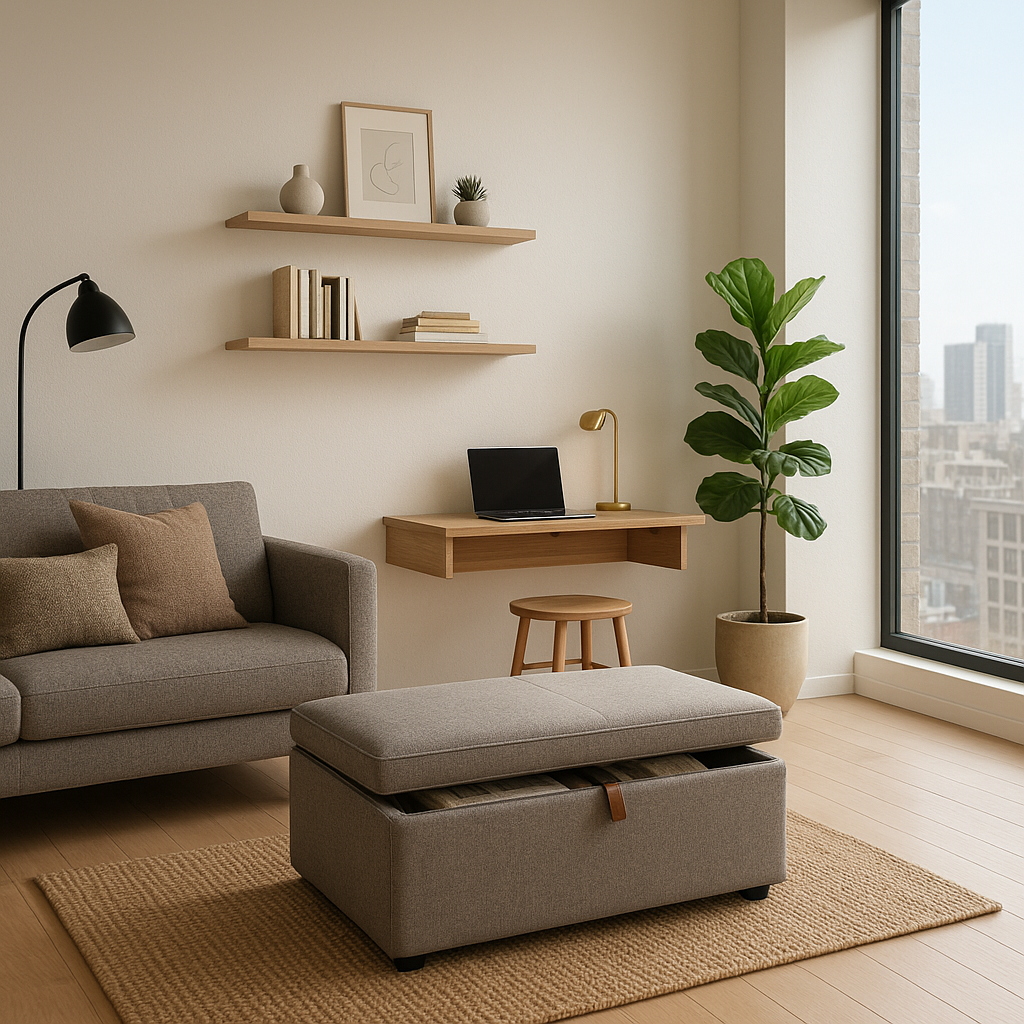
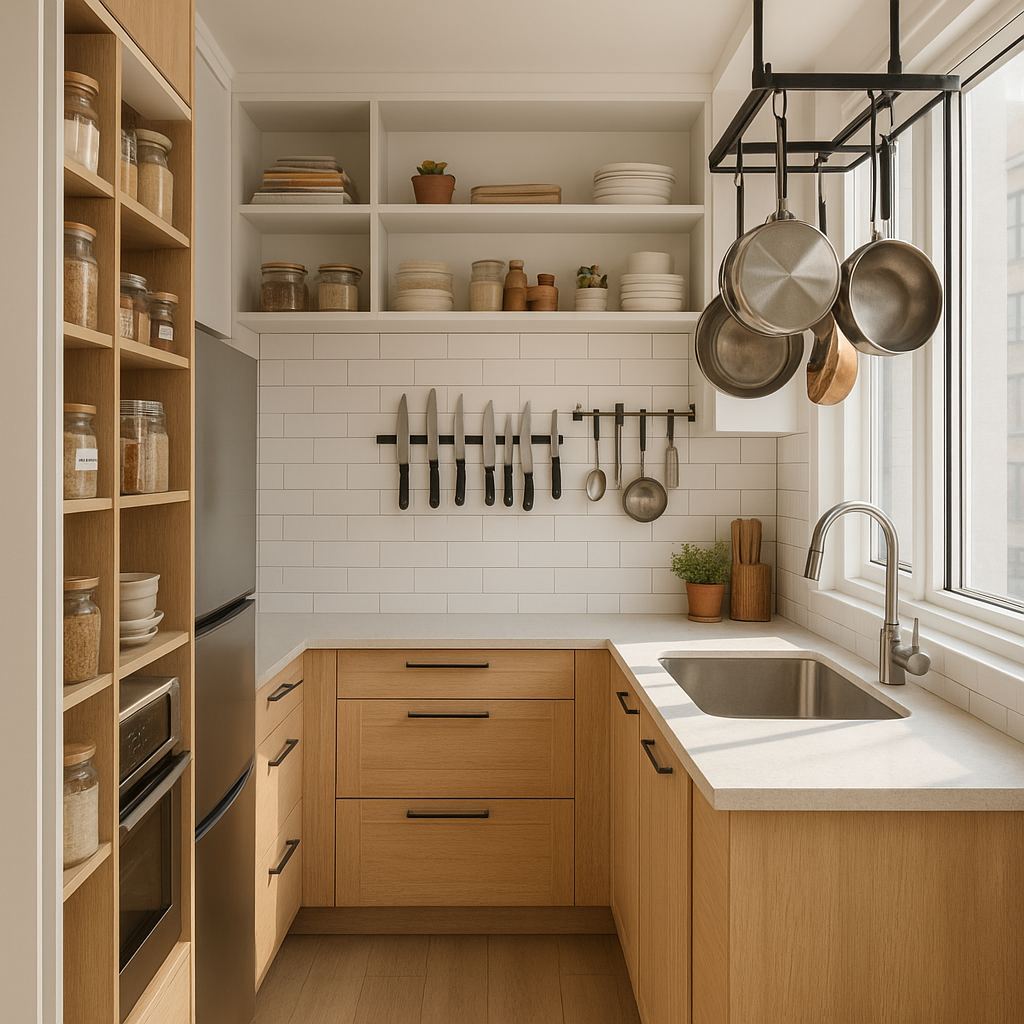
Floating shelves offer flexibility that traditional bookcases cannot match. Install them at varying heights to create visual interest whilst accommodating items of different sizes. In kitchens, magnetic knife strips and wall-mounted spice racks free up precious drawer and worktop space. Bathroom walls can accommodate towel rails, corner caddies, and mirrored cabinets that provide both storage and functionality.
Multi-Functional Furniture: Making Every Piece Work Harder
In a small flat, every item of furniture should ideally serve at least two purposes. Single-function furniture is a luxury that limited square footage simply cannot accommodate.
Ottoman storage beds have revolutionised small bedroom layouts. These beds feature hydraulic lift mechanisms that reveal cavernous storage compartments beneath the mattress—often providing the equivalent of a large wardrobe’s worth of space. They’re ideal for storing seasonal clothing, spare bedding, and items you don’t need daily access to.
Similarly, sofa beds have evolved considerably from the uncomfortable contraptions of previous decades. Modern designs provide genuinely comfortable seating whilst offering guest accommodation when needed. Many include built-in storage compartments for cushions and bedding.
Consider these multi-functional options for other areas of your flat:
- Storage benches in hallways provide seating for putting on shoes whilst concealing footwear, umbrellas, and outdoor accessories
- Nesting tables offer flexible surface space that can be tucked away when not required
- Drop-leaf or extending dining tables accommodate both daily use and entertaining without permanently monopolising floor space
- Wall-mounted folding desks create a workspace that disappears when the working day ends
- Coffee tables with lift-top mechanisms provide hidden storage for remote controls, magazines, and electronic devices
Kitchen Storage: The Small Flat’s Greatest Challenge
Kitchens in small urban flats are notoriously compact, often described estate agents as “kitchenettes” with a generosity that borders on misleading. Yet the kitchen typically requires more storage than any other room, accommodating cookware, utensils, appliances, and food supplies.
Maximise Cupboard Efficiency
Internal cupboard organisers transform chaotic spaces into models of efficiency. Tiered shelving inserts double the capacity of standard shelves, making items at the back visible and accessible. Pull-out drawers or baskets allow you to utilise the full depth of cupboards without requiring the flexibility of a yoga instructor to retrieve items from the rear.
The back of cupboard doors represents frequently overlooked storage potential. Adhesive hooks or over-door racks can accommodate cleaning supplies, pot lids, or chopping boards. Inside cabinet doors can hold spice racks, measuring spoons, or kitchen wrap dispensers.
Creative Worktop and Wall Solutions
Whilst clear worktops create an illusion of space, some items genuinely benefit from worktop storage. Attractive canisters for frequently used ingredients, a knife block, or a utensil pot can be both functional and aesthetically pleasing. The key is curation—display only what you use daily.
A ceiling-mounted pot rack, if your ceiling height permits, frees up substantial cupboard space whilst keeping cookware easily accessible. Alternatively, a pegboard wall system offers completely customisable storage that can evolve with your needs. Hooks, shelves, and baskets can be repositioned as required, accommodating everything from utensils to small appliances.
Bedroom Storage: Creating Calm in Limited Space
Bedrooms should be restful sanctuaries, yet they often become dumping grounds for items that lack a designated home elsewhere. In small flats, bedrooms frequently need to function as multi-purpose spaces, accommodating work areas, exercise equipment, and storage for non-bedroom items.
Wardrobe Optimisation
The average wardrobe is used with shocking inefficiency. Implement these strategies to dramatically increase capacity:
- Install a second hanging rail at half-height for shorter items like shirts and folded trousers
- Use slimline velvet hangers, which take up significantly less space than traditional plastic or wooden versions
- Add shelf dividers to prevent toppling piles of folded clothes
- Store out-of-season clothing in vacuum bags on the top shelf or under the bed
- Hang organisers with pockets on the inside of wardrobe doors for shoes, accessories, or small items
Under-Bed Storage
The space beneath your bed is valuable real estate that shouldn’t be wasted. Flat storage boxes on wheels provide easy access to items whilst protecting them from dust. For divan beds without built-in storage, bed risers can create additional height underneath, allowing for deeper storage containers.
Reserve under-bed storage for items you need infrequently but not rarely—think seasonal clothing, spare bedding, or holiday decorations. Everyday items stored here quickly become inconvenient to access, and you’ll find yourself avoiding putting things away properly.
Bathroom Storage in Compact Spaces
Small flat bathrooms are often afterthoughts, squeezed into spaces that would challenge a contortionist. Yet bathrooms generate significant storage demands, from towels and toiletries to cleaning supplies and spare toilet paper.
Over-toilet shelving units exploit otherwise wasted vertical space. These freestanding or wall-mounted units can accommodate towels, decorative baskets of toiletries, and spare supplies. Choose designs with both open and closed storage to balance accessibility with visual calm.
Corner shower caddies with tension poles provide multi-level storage without requiring any permanent installation—particularly valuable in rental properties where drilling into tiles might be prohibited. Similarly, over-door hooks on the bathroom door create hanging space for towels, robes, or toiletry bags without any installation requirements.
Under-sink storage, despite the awkward plumbing, can be optimised with stackable drawers or pull-out baskets designed to work around pipes. This often-neglected space is ideal for cleaning products and spare toiletries.
How Can I Create Storage in a Rented Flat?
Renters face unique challenges, as permanent modifications are typically prohibited. Fortunately, numerous solutions require no drilling or alterations whatsoever. Freestanding shelving units, over-door organisers, tension rods, and adhesive hooks all provide storage without risking your deposit.
Command strips and similar adhesive products have evolved considerably, now capable of supporting surprising weight when applied correctly. They’re suitable for hanging lightweight shelving, mirrors, and organisers. Always check the weight rating and follow application instructions precisely for best results.
Freestanding wardrobes offer an alternative to built-in storage and can be taken with you when you move. Whilst they may not fit as seamlessly as fitted wardrobes, modern designs are far more attractive than the utilitarian options of the past.
What Are the Best Storage Solutions for Awkward Spaces?
Small flats often feature awkward architectural elements—sloping ceilings, unusual corners, or redundant chimney breasts. These quirks, whilst challenging, offer opportunities for creative storage.
Sloping ceilings in attic conversions benefit from custom-fitted wardrobes or drawer units designed to match the angle. Whilst bespoke solutions represent an investment, they transform previously unusable space into valuable storage. Alternatively, low bookcases or storage benches can occupy these areas without requiring customisation.
Alcoves flanking chimney breasts are ideal for shelving or fitted cupboards. Even simple floating shelves in these recesses provide display and storage space that doesn’t impinge on the room’s footprint. Applying small space decorating tricks can help integrate storage into your overall aesthetic whilst keeping the room feeling open and inviting.
The space above doorways can accommodate shelving for books or items you need infrequently. This high-level storage adds character whilst serving a practical purpose.
How Do I Keep My Small Flat Organised Long-Term?
Creating storage solutions is only half the battle; maintaining organisation requires ongoing commitment. The “one in, one out” rule helps prevent accumulation—whenever you acquire something new, something else must leave. This principle is particularly effective for clothing, books, and kitchen gadgets.
Establish a nightly reset routine, spending ten minutes returning items to their designated homes. This prevents the gradual creep of clutter that transforms organised spaces back into chaos. Everything needs a designated place; items without homes inevitably end up creating clutter on worktops and floors.
Regular mini-declutters prevent the need for major overhauls. Set a reminder to review one drawer or cupboard each month, removing items that are no longer needed. This ongoing maintenance is far less daunting than annual clear-outs.
Conclusion
Maximising storage in a small urban flat requires a combination of ruthless decluttering, vertical thinking, multi-functional furniture, and creative exploitation of awkward spaces. The strategies outlined above—from floor-to-ceiling shelving and ottoman beds to over-door organisers and under-sink drawers—can dramatically increase your usable space without requiring structural changes or significant investment.
The key is approaching your flat’s limitations as design challenges rather than insurmountable problems. Every awkward corner, blank wall, and unused vertical space represents potential storage waiting to be unlocked. By implementing even a handful of these solutions, you can transform a cramped, cluttered flat into an organised, functional home that feels considerably more spacious than its square footage suggests. Remember that organisation is an ongoing process rather than a one-time project, but with the right systems in place, maintaining order becomes second nature.